Come Hungry, Stay for the Show: A Food Lover's Guide to India Festival Tampa
Why the Food Is Half the Festival
If you ask anyone who's been to the India Festival Tampa what they remember, the dance stage comes second. The first answer is almost always the food. The festival's food vendor section is a working tour of regional Indian cooking, run by the same families, temples and caterers who feed the Tampa Bay diaspora the rest of the year. For one Saturday in October, they set up at the Florida State Fairgrounds and cook for ten thousand people — and they cook like it's the biggest day on their calendar, because for most of them, it is.
This is not the "butter chicken and naan" version of Indian food. It's the version you'd actually find in an Indian home or a regional street market: dosas rolled to order off a hot griddle, biryani layered with real saffron, chaat assembled in front of you so the puri stays crunchy, regional dishes you have to know to look for. The range is wide enough that a first-timer can feel a little lost, which is the point of this guide. Come hungry, bring people to share with, and use this as your map.
The Greatest Hits (Start Here)
If it's your first visit, these are the dishes that define the food section. They're the ones with the longest lines, and the lines are there for a reason.
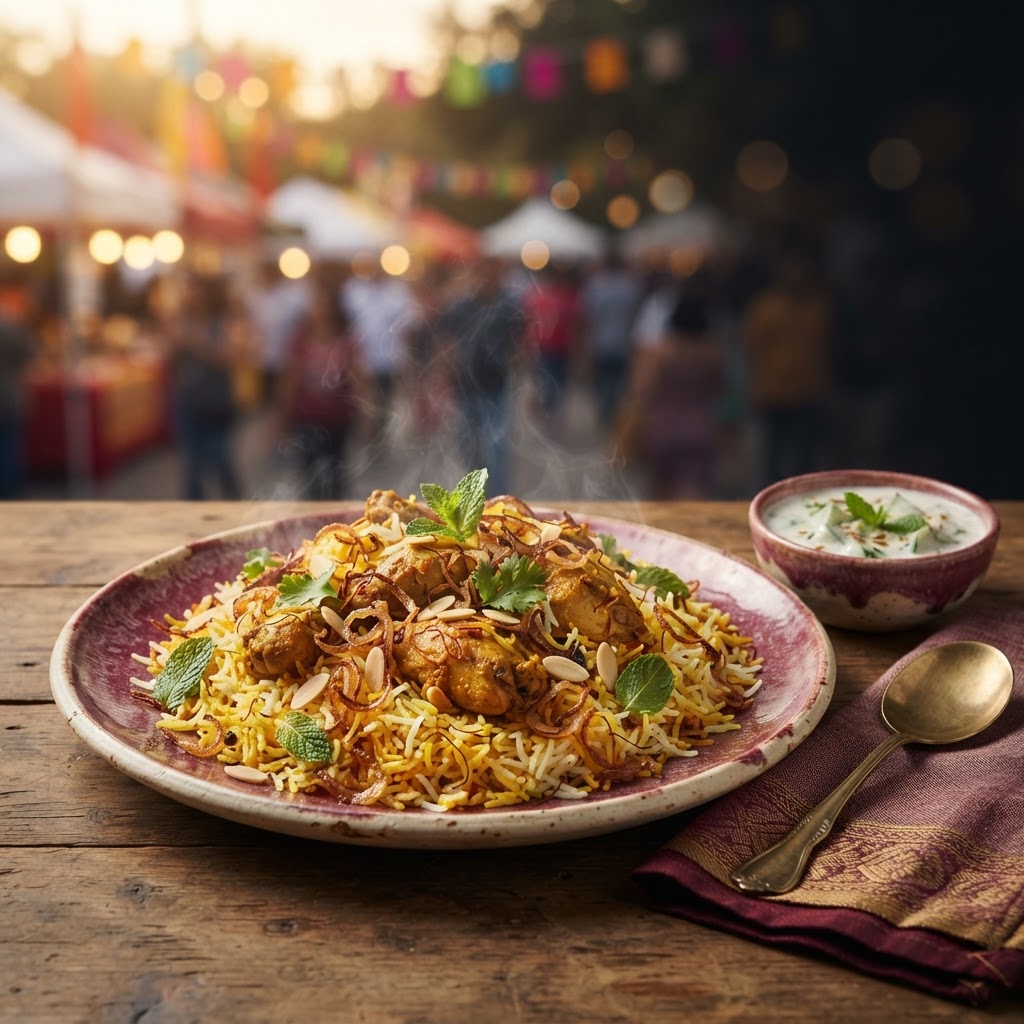
Biryani is the anchor. Done right — and at this festival it usually is — it's a layered rice dish cooked under sealed dough or a heavy lid so the rice steams in its own aromatics: saffron, fried onions, whole spices, and marinated meat or vegetables. You should be able to lift a forkful and smell the cardamom before you taste it. A good biryani is loose, not clumpy, with each grain separate. Get it early, while the batches are fresh.
Dosas are the other anchor. A dosa is a crepe made from fermented rice and lentil batter, cooked on a flat griddle until it's crisp on the outside and soft inside, then rolled or folded around a spiced potato filling. It comes with sambar (a spiced lentil soup) and coconut chutney. The dosa griddle is one of the best smells at the festival, and the line moves fast because they cook them continuously. If you've never had one, this is the dish to wait for.
Chaat is the snack category, and it's where you'll spend a lot of small bills. Chaat means "to lick" — the idea is that it's so good you'll lick the plate. The greatest hits are pani puri (hollow crispy shells filled with spiced potato, chickpeas, tamarind chutney and tangy flavored water, eaten in one bite), bhel puri (puffed rice tossed with chutneys, onion, tomato and sev), and sev puri. Chaat is assembled to order, and the whole point is the contrast of textures — crunchy, soft, tangy, sweet, spicy — in a single mouthful. Eat it standing up, right after it's made.
The Regional Dishes Worth Looking For
Once you've covered the hits, go looking for the regional food. This is where the festival earns its reputation. The vendors come from across the Indian diaspora in Florida, and they bring the food of their regions. You won't always see big signs for these — you'll see them on handwritten menus or just by watching what the Indian aunties in the line are ordering.
Gujarati food, fittingly, is well represented: dhokla (a savory steamed chickpea cake, spongy and slightly sweet), khandvi (thin rolled gram flour bites), and khaman. Gujarati food is famously a balance of sweet, sour and spicy in the same dish, which surprises people expecting heat. If you've only had North Indian food, try a plate of dhokla and you'll taste what the balance means.
Punjabi food brings the richness: chole bhature (spiced chickpeas with a puffed fried bread), paneer tikka off a tandoor, and sarson ka saag with makki roti in the cooler months. This is the comfort-food wing of the menu.
South Indian food goes well past the dosa: idli and vada with sambar, uttapam (a thick rice pancake with vegetables), and filter coffee served in a steel tumbler — strong, sweet, and worth the wait. If you see a South Indian filter coffee booth, get one and walk with it.
Goan and Hyderabadi dishes show up too: vindaloo with real heat, haleem during the right season, and double ka meetha for dessert. Ask the vendor what region they're cooking — they'll tell you, and it changes how you taste it.
The Sweet Ending
Save room, because the dessert section is not an afterthought. Gulab jamun — deep-fried milk-solid dumplings soaked in rose-cardamom syrup, served warm — is the one most people know. Jalebi is the showpiece: a bright orange spiral of batter fried crisp and soaked in syrup, eaten hot, often with a glass of milk. Rasmalai (soft cheese patties in saffron milk) and kheer (rice pudding) are the quieter options. If you only have room for one, get the jalebi while it's fresh off the pan.
How to Eat Your Way Through the Day
A few practical notes from people who do this every year:
- Go with a group and share. The portions are generous and the point is to try as many things as possible. Four people can order eight dishes and still walk out full.
- Pace it with the stage. Eat between dance divisions. The food lines are shortest during the morning and late-afternoon performance rounds, and longest right at lunch.
- Carry cash for the small booths. Most take cards now, but a few chaat and dessert vendors are cash-first, and the ATM lines get long at noon.
- Ask before you assume heat. Indian food ranges from mild to very spicy. Vendors will tone it down if you ask, and they're used to the question.
- Try something you can't pronounce. The best meals here are the ones you didn't plan. If a booth has a line of Indian grandmothers, get in it.
The Real Reason It Tastes Like This
What makes the food at the India Festival Tampa different from a restaurant isn't the recipes — it's the cooks. A lot of these vendors are families and temple kitchens cooking the food they make at home, scaled up for one day. They're not trying to dial it down for a broad audience. They're cooking for their community, and the rest of us are lucky to be invited. That's why the biryani tastes like someone's grandmother made it: because, often, someone's grandmother did.
So come hungry. Stay for the show, yes — but come hungry first. The food section is half the festival, and it's the half you'll still be talking about on the drive home.