The Booths That Built a Bazaar: Shopping the India Festival Tampa Marketplace
Not a Trade Show. A Bazaar.
The first surprise for a first-time visitor to the India Festival Tampa is the marketplace. People arrive expecting a row of folding tables with flyers and leave having spent two hours walking a bazaar. The exhibitor section at the festival is one of the largest Indian marketplaces in the southeastern United States, and for one Saturday in October it turns a Florida exhibition hall into something close to an Indian market street — dozens of booths, organized by category, run by vendors from across the state and beyond.
This is the part of the festival that rewards a plan. It's big enough that you can miss the booth you'd have loved, and categorized enough that a little strategy gets you to the things you actually want to see. Here's how to shop it.
The Categories: So You Can Shop With a Plan
The booths are split into categories, which is what makes the marketplace navigable. Instead of wandering, you can head straight for what you're after — or browse category by category.
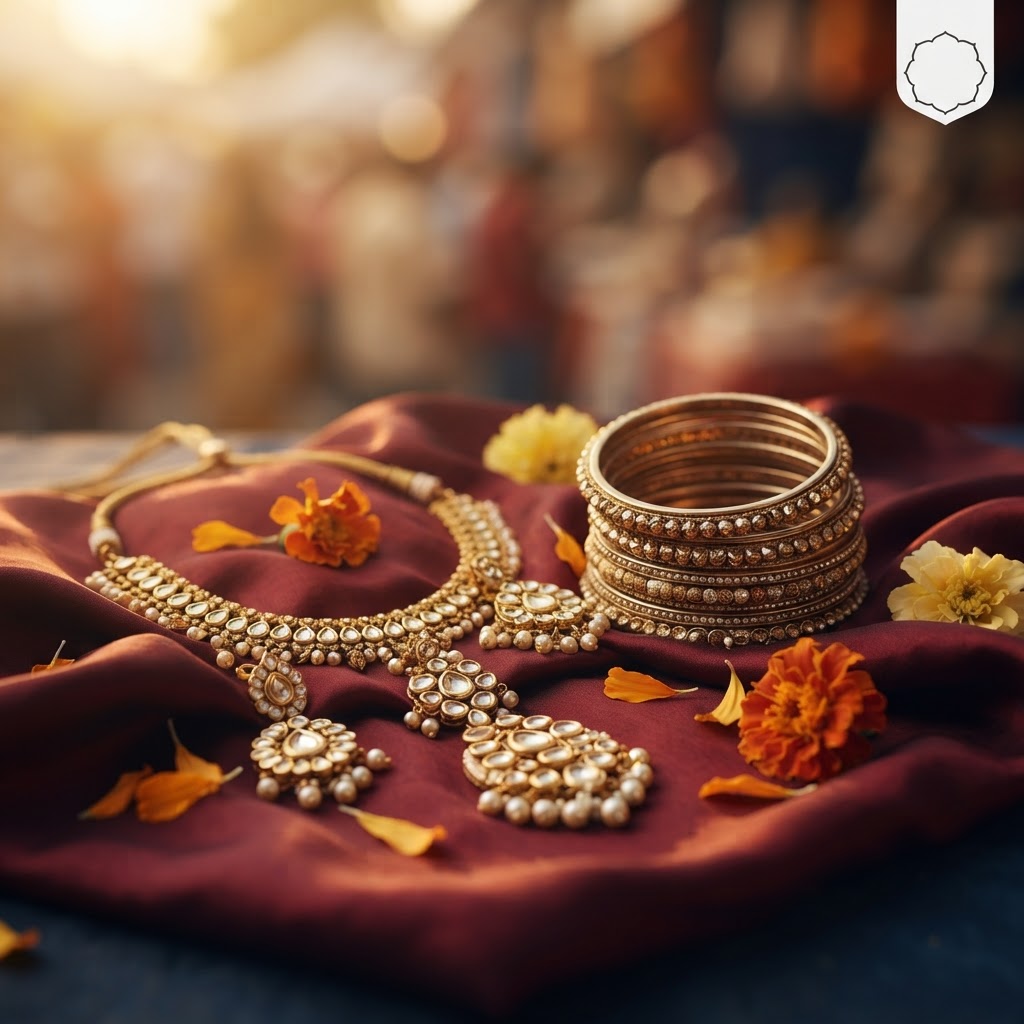
Real Jewelry is the headline category for a lot of shoppers. These booths sell 22-karat gold, kundan (gold foil with gemstones), and polki (uncut diamond) pieces — the kind of bridal and festival jewelry that's normally handed down through a family. At the festival, it's available to try on and buy, often sold by weight the way it is in Ahmedabad or Surat. If you're in the market for a serious piece, this is the category to budget for, and the vendors here are the same ones who supply Indian jewelers across the region.
Silk and Textiles is the category that stops people in the aisle. You'll find Kanjivaram and Banarasi sarees — the heavyweight silks with gold zari borders that are the backbone of Indian formal dress — alongside lehengas, salwar kameez, and contemporary Indo-western pieces. The colors are the ones you don't see in a Florida mall: deep magentas, peacock blues, marigold yellows, and the gold-threaded borders that catch the hall lighting. Someone who grew up going to these festivals knows to check the zari work on the border before deciding if a saree is worth the price; a first-timer can just ask the vendor, who'll tell you where it was woven and what occasion it's meant for.
Handicrafts and Home booths carry brass and marble inlay, wood carvings, marble statues, and puja items — the objects that make an Indian home look and feel like one. This is the category for gifts and for the pieces that last longer than a day. The craftsmanship here is real, and the prices are often better than you'd find online because you're buying direct.
Professional Services booths — immigration attorneys, accountants, real estate agents, financial advisors — are there because the festival is also where the diaspora does its networking. If you're in the community, this is where you meet the people you'll do business with for the next year. If you're not, it's a window into how the community operates.
Food Vendors run the full length of the hall and deserve their own guide — but in marketplace terms, the food section is the category that keeps people in the building all day.
How to Shop It Well
A few notes from people who do this every year:
- Walk it first, buy second. The marketplace is big enough that the first booth you see probably isn't the one you want. Do a lap, note what catches your eye, then go back.
- It's okay to haggle — politely. On bigger pieces, especially jewelry and textiles, there's often some room. The vendors expect it. Be respectful and you'll both enjoy it more.
- Bring a tote. You'll end up with more than you planned. A reusable bag saves you juggling boxes.
- Ask where things are from. The vendors know their stock. A saree from Banaras and a saree from Kanchipuram are different stories, and the vendor will tell you which is which.
- Catch the booths early. The best pieces go in the morning. By mid-afternoon, the jewelry booths in particular have empty spots where the good stuff was.
The Vendors Who Come Back Every Year
One of the things that makes the marketplace work is continuity. A lot of the vendors have been at the festival for years — some for over a decade. The same jeweler, the same saree vendor, the same brass booth, set up in roughly the same spot, with customers who come looking for them specifically. That continuity is what turns a marketplace from a trade show into a bazaar. People aren't just browsing; they're catching up with the vendor they bought from last year, asking what's new, and bringing their kids to pick out bangles the way they did when they were young.
If you're a first-timer, that continuity is invisible to you — but it's the reason the marketplace has the energy it has. The vendors aren't there for a one-off weekend. They're there because the India Festival is the day their best customers all show up in one place.
What to Look For If You're New to Indian Goods
If you've never shopped for Indian jewelry, textiles, or handicrafts, the marketplace is a great place to learn — because you can handle the pieces and talk to the people selling them. A few entry points:
For jewelry: start with the difference between 22-karat gold (soft, warm, traditional), kundan (stone-set in gold foil, ornate), and polki (uncut diamonds, old-world). You don't have to buy to try pieces on and learn. A good vendor will walk you through it.
For textiles: learn the difference between a Kanjivaram (South Indian silk, heavy, contrasting border) and a Banarasi (North Indian silk, often with Mughal-inspired motifs). Pick them up. The weight and the zari tell you a lot before the price does.
For handicrafts: look at the inlay work on marble, the chasing on brass, and the carving on wood. The detail is where the value is, and it's easier to see in person than online.
The Marketplace as a Window
Here's the thing about the India Festival Tampa marketplace that's easy to miss: it's not just a place to buy. It's a window into how the Indian diaspora in Tampa Bay lives — what it wears, what it puts in its homes, what it values enough to spend a Saturday shopping for. The jewelry booth with three generations of a family trying on bangles is doing something more than selling. The saree vendor explaining a weave to a young customer is doing something more than moving inventory.
The marketplace is the part of the festival that turns a cultural event into a lived one. You can watch the dance, eat the food, and leave having had a great day. But if you walk the bazaar, talk to the vendors, and handle the pieces, you leave with something of the culture in your hands — sometimes literally, in a bag.
So this October, give the marketplace the time it deserves. Walk it slowly. Ask questions. Try things on. And if you find something you love, buy it — because the same booth, with the same vendor, will be back next year, and the year after that, as long as the community keeps showing up.
