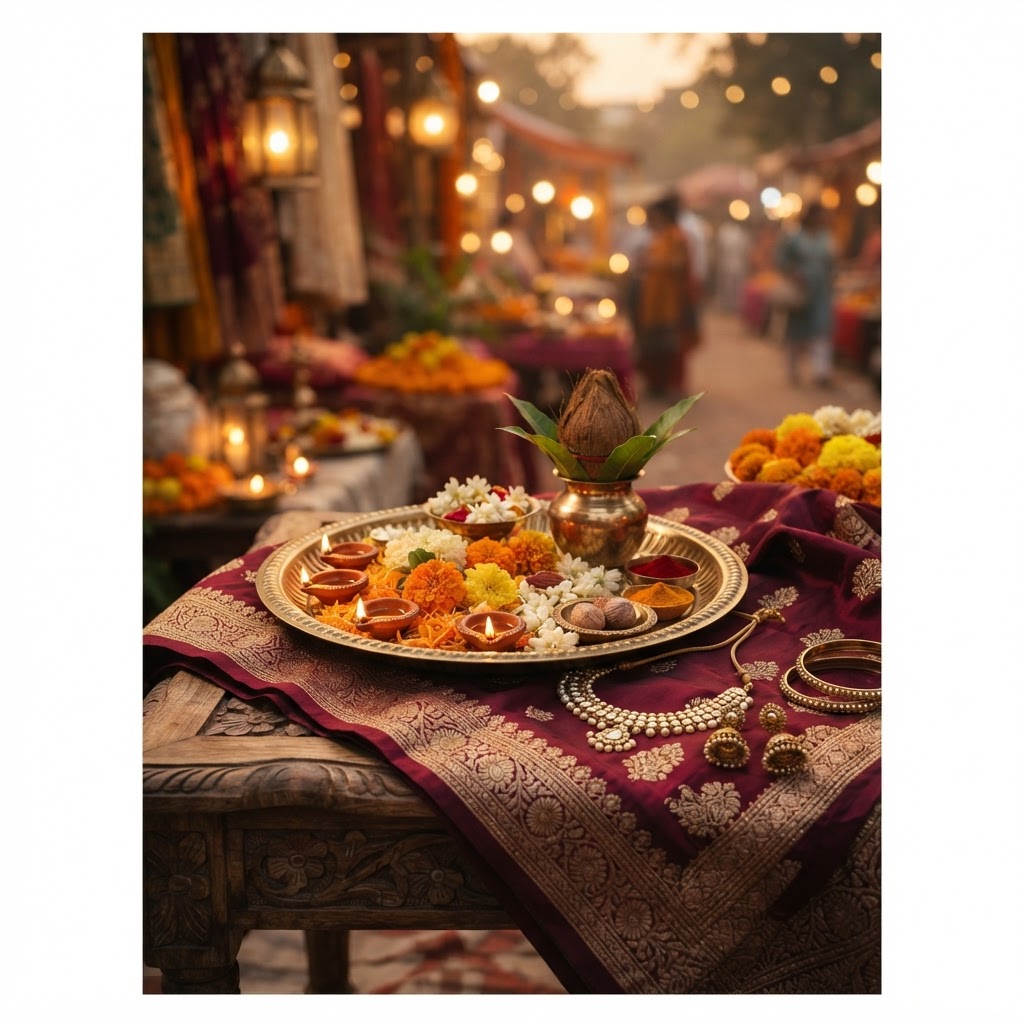
The Many Colours of India: How India Festival Tampa Brings Culture and Heritage to Life
One Saturday, a Whole Subcontinent
If you spend enough years in Tampa Bay, you start to notice something quiet but persistent: India is already here. It's in the smell of cardamom drifting from a kitchen in Carrollwood, in the click of dandiya sticks at a Garba night in October, in the way a grandmother in a silk saree teaches her American-born granddaughter the steps to a Raas she first learned in a village in Gujarat. The India Festival Tampa, now in its 37th year, is the one day a year when all of that stops being quiet and fills the Florida State Fairgrounds with about ten thousand people, the smell of biryani, and the sound of a dhol drum.
It's worth saying plainly what the festival actually is, because the word "festival" undersells it. The India Festival Tampa is two large events under one roof: a juried folk and classical dance competition that teams rehearse for months to win, and an Indian marketplace of dozens of exhibitor booths selling real jewelry, silk sarees, handicrafts, and regional food. Around those two cores sits a community celebration — the Gujarati Samaj of Tampa Bay's annual gathering of the diaspora, open to anyone who wants to come. It runs a full day, 9 AM to 10 PM, and it is the kind of event where you can spend four hours and still feel like you missed half of it.
The Dance Competition: Where the Festival Gets Its Heartbeat
Walk through the main entrance and the first thing you'll hear is the stage. The India Festival Tampa's dance competition is the center of gravity for the whole day, and it's taken seriously — not county-fair serious, but actual-trophies-and-cash-prizes serious, with judges scoring on technique, choreography, expression, costume, and song selection across a 500-point rubric.
The competition is split into divisions so a seven-year-old's first solo isn't judged against a college team's polished Raas. The divisions run Minors, Juniors, High School, College, and Adults, and within them the dance forms span the country: Raas and Garba from Gujarat, Bhangra from Punjab, Bharatanatyam and Kathak from the classical traditions, Odissi, folk pieces from Rajasthan and Maharashtra, and contemporary fusion work that stitches old forms to new music. A team might be a group of high schoolers in matching lehengas spinning in unison, or a single adult performer in a Bharatanatyam costume whose every fingertip is telling a story from the Gita.
What makes it worth watching — even if you've never seen Indian dance before — is that the competition format gives you a reason to pay attention. You start noticing the things the judges notice: the precision of a mudra, the synchronicity of a group's footwork, the moment a performer's expression shifts to match the mood of the song. By the afternoon rounds, the audience is leaning forward. The trophies are handed out at the end of the day, and for the teams that win, it's the kind of thing that ends up in a family photo for the next generation.
The Marketplace: A Bazaar, Not a Booth Row
Step away from the stage and you're in the second half of the festival — the exhibitor bazaar, and this is the part that surprises first-time visitors. It is not a row of folding tables with flyers. It's a walkable marketplace of dozens of booths that, for one day, turns a Florida exhibition hall into something close to a Indian market street.
The booths are split into categories so you can actually shop with a plan. Real Jewelry booths sell 22-karat gold, kundan, and polki pieces — the kind of bridal and festival jewelry that's normally handed down through a family, here available to try on and buy. Silk and Textile booths have Kanjivaram and Banarasi sarees, lehengas, and salwar kameez in colors you don't often see in a Florida mall. Handicraft and Home booths carry brass, marble inlay, wood carvings, and many more. Professional Services booths - provides services that are essential and important— are there because the festival is also where the diaspora does its networking. And the Food Vendor section, which deserves its own section, runs the full length of the hall.
What makes the marketplace work is that it's not a trade show. People are there to browse, to haggle a little, to catch up with the vendor they bought a saree from last year, and to let their kids pick out a pair of bangles. It's the closest thing to an Indian bazaar most visitors will walk through without buying a plane ticket.
The Food: Why "Come Hungry" Is on the Poster
The food is the reason the festival's tagline is "Come Hungry. Stay for the Show." The food vendor section is a tour of regional Indian cooking in a single afternoon, and it's run by vendors who cook for crowds all year — temple fundraisers, wedding caterers, family kitchens that scaled up.
You'll find the greatest hits: biryani layered with saffron and fried onions, dosas rolled crisp off a hot griddle with sambar and chutney, chaat — pani puri, bhel puri, sev puri — assembled to order so the puri stays crunchy, chole bhature, paneer tikka off a tandoor, gulab jamun and jalebi for the sweet tooth. But you'll also find regional dishes you have to look for: Gujarati dhokla and khandvi, Punjabi sarson ka saag with makki roti, South Indian filter coffee served in a steel tumbler, and Goan vindaloo for anyone who wants to test the kitchen's heat.
The practical move is to go with a group and share, because the portions are generous and the temptation is to order one of everything. A lot of the food vendors are the same families who have been at the festival for years, so the quality is consistent — this is their biggest day of the year, and they cook like it.
Community: The Reason It All Happens
The throughline of the whole day — the dance, the shopping, the food — is that it's put on by a community, for a community, and then opened to everyone. The Gujarati Samaj of Tampa Bay has run the India Festival for 37 years, and the volunteer base is the reason a 10,000-person event runs at all. Volunteers run the gates, staff the information booths, manage the stage schedule, and direct parking. A lot of them are the same parents whose kids are competing on stage.
That community backbone is also why the festival feels different from a commercial event. There's a temple- fundraiser energy to it — the sense that the people running a booth or checking tickets have a personal stake in the day going well. It's also why the crowd is mixed: Indian-American families who've been coming for a decade, USF students hearing about it for the first time, Tampa locals of every background who just like a good street-fair, and snowbirds who plan their October around it.
For the diaspora, the festival is the one day a year the whole community is in one place. For everyone else, it's the easiest way to spend a Saturday understanding why that community matters to Tampa Bay.
What to Expect If You're Coming for the First Time
A few practical notes, because the festival rewards a little planning:
- Get there early. Parking fills up before noon. The gates open at 9 AM and the dance competition starts in the morning, so early arrivals get the best of both the stage and the marketplace before the afternoon crowd.
- Bring cash and a card. Most booths take cards now, but a few food vendors and smaller exhibitors are cash-first.
- Plan around the stage schedule. The dance competition runs all day in divisions. If you want to see a specific style — say, the college Raas teams — check the posted schedule and block out that hour. The finals and trophy presentations are in the late afternoon and evening.
- Wear comfortable shoes and bring a layer. It's a full day on your feet, and the Florida State Fairgrounds in late October is warm in the day and cool after sunset.
- Bring the family. The festival is built for all ages — there are kids' dance divisions, food that ranges from mild to fiery, and the marketplace is stroller-friendly. Tickets are $11.50 online, which keeps it one of the most affordable full-day events in the region.
The Bigger Picture: Why a Festival Like This Matters
There's a temptation to write about a cultural festival as a novelty — "a taste of India in Florida" — but that framing misses the point. The India Festival Tampa is not a sampling of a faraway culture. It's a portrait of a community that has been in Tampa Bay for generations, that has built temples and businesses and schools here, and that, one Saturday a year, invites the rest of the city to see what it has been keeping alive.
The dance teams on stage are not performing India — they're growing up in it, in Tampa, and the festival is where that shows. The vendor selling a Kanjivaram saree is not selling a costume — she's selling the same textile her mother wore, to a customer who might wear it to her own daughter's wedding. The kid eating a dosa for the first time is doing what every kid at the festival is doing: figuring out what of this is theirs.
That's the real colour of the festival. Not the marigolds, not the lehengas, not the gold — though all of that is there, and it is beautiful. The real colour is the sound of ten thousand people, of every background, spending a Saturday together in a Florida fairground, and leaving with a little more of each other than they came with.
The Details
India Festival Tampa 2026
Saturday, October 31, 2026
9:00 AM – 10:00 PM
Florida State Fairgrounds, Tampa
Tickets: $11.50 online
Presented by Gujarati Samaj of Tampa Bay
Whether you come for the dance, the shopping, the food, or just a Saturday that feels different from the rest of the year — come hungry, stay for the show, and you'll understand why this festival has been Tampa Bay's most colorful Saturday for 37 years.
